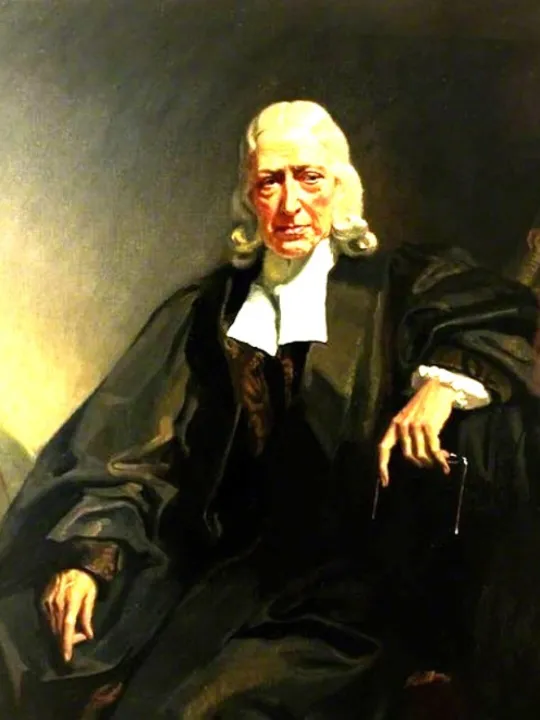
Today, there are over 75 million people throughout the world who call themselves 'Methodist'. They can be found in Britain, Europe, the Americas, the Caribbean, Africa, Asia and the Pacific. With such a far reach, it's truly amazing to realise that Methodism itself didn't begin until the mid-eighteenth century. Much credit should surely be given to the strong leadership, extensive travelling and organisation abilities of one man – John Wesley (1703-1791). He is celebrated today as the most prominent 'Founder of Methodism'.
The Rise of Methodism
John Wesley was one of fifteen children born to the Rev Samuel Wesley and his wife Susannah in Epworth, Lincolnshire. He followed his father into the Anglican ministry, and was ordained priest in 1729. Whilst working as a tutor and Fellow of Lincoln College, Oxford, John met regularly with a group of friends for Bible study, prayer, fasting and Holy Communion. This was the 'Holy Club', and they soon extended their activities to charitable works, such as visiting prisons and workhouses to distribute food, medicine, clothing and books. They even started a school. As a result, the members earned the mocking nickname 'Methodists' because of the various 'methods' they used in their prayers and service. They were criticised for taking the gospel far too seriously and for being 'too enthusiastic' about their religion. Yet, members of the Holy Club saw the importance of taking their faith outside the church and into society. Holiness, they believed, was not achieved except in community, a tenet that is carried through to this day, with the call to Service – being a good neighbour in the community and challenging injustice. (See Our Calling)
"The Gospel of Christ knows no religion but social; no holiness but social holiness." (John Wesley)
After more than a decade of spiritual searching, including a disastrous period of missionary work in America with his younger brother, Charles, in May 1738 John had a spiritual experience that convinced him of the truth of his salvation through faith in Jesus Christ. He began to preach that this salvation was available to everyone – and it was this preaching that took him all over the country during the next 50 years (travelling, it is estimated, over 250,000 miles).
John's younger brother, Charles, was also a member of the Holy Club who, having been an Anglican priest, also experienced an evangelical conversion. As a result, he became an influential Methodist preacher and prolific hymn writer. Two of his best known works are the words that became the carol, 'Hark! The Herald angels sing' and the hymn 'And Can It Be' (written after his conversion).
Divisions
Although John claimed he would always be a member of the Church of England, by the time of his death (in 1791) the Methodist movement had grown away from this national church in Britain. There were also divisions within the movement itself, over policies, personalities and priorities. Each strand of Methodism had its own charismatic leaders and particular styles of worship and organisation. The main two were:
- the Wesleyans (who held firmly to the teachings of John Wesley), and
- the Primitives (from 1807) who were frequently referred to as the 'Ranters' or the 'Prims'. They wanted to get back to Methodism's original aims of outdoor evangelism and strict discipleship. They tended to be strongest in the working-class communities of the Midlands and North of England.
Twentieth and Twenty-First Centuries
Although Methodism has had many regional and other variations (eg New Connexion, Bible Christians and United Methodist Free Churches), in the twentieth century most of these smaller Methodist denominations united in 1907, forming the United Methodist Church. They, in turn, joined with the Wesleyans and 'Prims' in 1932 – in theory, though in practice the coming together of the strands took longer (as was the case in Easingwold – see Our Story)
In the twenty-first century, the Methodist Church continues to be a discipleship movement of Christians, intent on mission, nurturing faith and engaged in action for social justice at home and abroad.
For further information, please visit the Methodist Church in Britain.
A good summary is also available from the BBC website.